

What is drive to store?
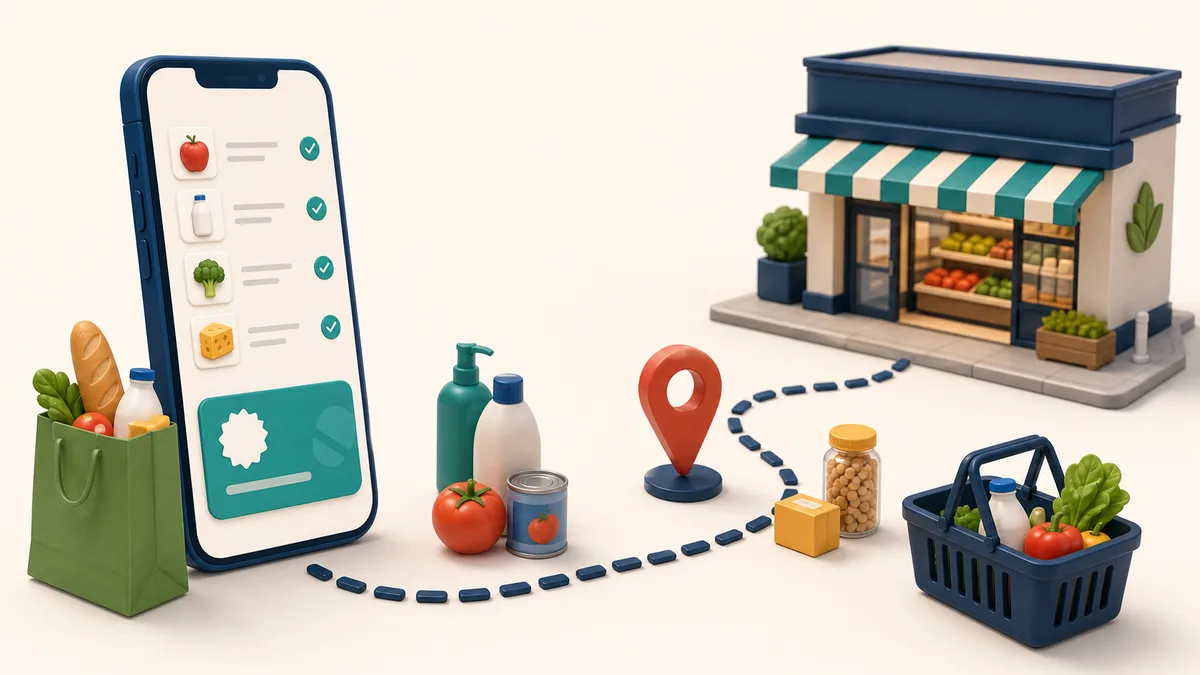
Drive to store describes marketing activity designed to move a person from digital contact toward a physical store visit. The goal is not only awareness or traffic, but a real offline action that happens later in the shopping journey.
This is especially relevant in categories where the final purchase still takes place in store rather than in ecommerce checkout.
Why is this concept important?
In many FMCG campaigns, the digital touchpoint is only the beginning of the journey. The shopper may see a message, react to a list prompt, remember a brand, or engage with a promo online, and then complete the purchase in a store. That is closely related to ROPO.
Because of that, drive to store is a natural part of retail media whenever the platform can influence the basket before the visit happens.
How does drive to store work in practice?
Typical drive-to-store mechanics include:
- showing an offer or product in the right planning moment,
- using context or location-relevant signals,
- connecting the message with shopping list behavior,
- supporting an offline decision with a clear practical cue.
The best examples do not force footfall. They reduce friction between purchase planning and store action.
How should drive to store be measured?
Measurement depends on what the brand can observe, but common signals include:
- store visits or visit proxies,
- offline sales after exposure,
- response to promotion or list-led activation,
- changes in category or brand behavior around the campaign.
| Signal | What it shows | Main limitation |
|---|---|---|
| Store visit | the user moved from digital contact into the physical channel | the visit alone does not say what was bought |
| Offline sales | the campaign may have influenced real commercial outcome | it usually requires data integration or modeling |
| List, coupon, or promo response | the user took a step close to shopping planning | it is an intermediate signal, not a full transaction |
Common misunderstandings
- Drive to store is not only about location targeting. Timing and shopping context also matter.
- A store visit alone is not the whole story. The quality and value of the visit matter too.
- The click is rarely the final goal. The most important part happens after the digital touchpoint.