

What is retail media?
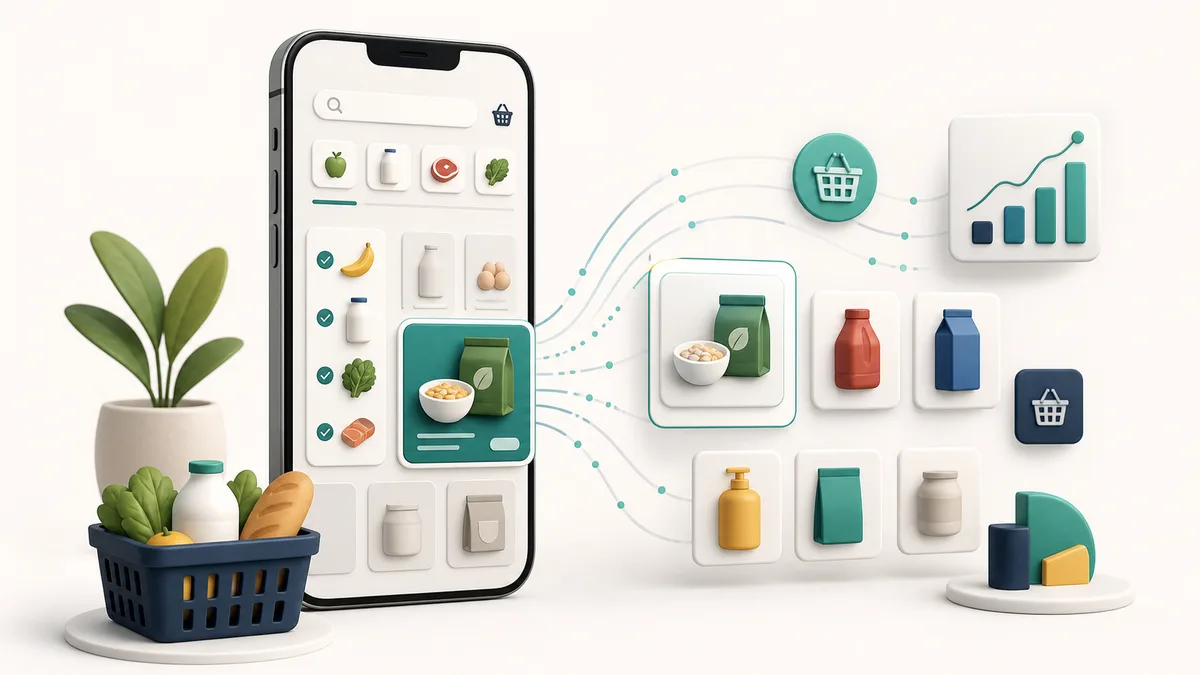
Retail media is an advertising channel built around shopping context, shopper data, and media inventory that appears close to a purchase decision.
The key difference is not the banner size or the buying model. The difference is the moment. A retail media contact happens when the shopper may already be:
- planning a list,
- reviewing offers,
- comparing products,
- preparing for a store visit.
That is why retail media is both a media channel and a commercial channel. It should help a brand earn attention, but also support a clearer path toward basket entry, trial, promotion response, or store traffic.
What makes it different from ordinary display?
A standard display advertising buy can be useful for reach, but it often treats the impression as the main event. Retail media asks a different question: did the contact happen in a context where the user was closer to a real shopping task?
| Question | Standard display | Retail media |
|---|---|---|
| Primary context | Media consumption | Shopping, planning, or offer discovery |
| Typical signal | Exposure or click | Intent, category interest, list action, promotion response |
| Best use | Reach and awareness | Reach plus activation closer to purchase |
| Measurement pressure | Delivery quality | Delivery quality plus commercial behavior |
Retail media can still use display formats, native placements, coupons, sponsored products, and broader retail media network models. The format matters less than the combination of data, context, and intent.
Why does retail media matter in FMCG planning?
In FMCG, purchase decisions are frequent, fast, and strongly shaped by price, habit, visibility, availability, and promotion. Brands are not only fighting for attention. They are fighting for mental availability and basket entry.
Retail media helps planners move from broad reach questions to more practical campaign questions:
- Which shopper or household context are we reaching?
- Is the brand present before the store visit?
- Can the campaign support trial, promotion response, or add-to-list behavior?
- What signals can be used after the campaign to judge whether the contact was valuable?
This is why retail media is closer to shopper marketing than to display bought only for exposure.
Where Listonic Ads adds a specific signal
For Listonic Ads, the retail media logic starts with the shopping-list moment. The user is not only browsing content. They are organizing a household task, preparing a basket, and deciding what may be bought later.
That creates a useful signal for FMCG campaigns: exposure can be interpreted together with planning behavior, category interest, promotion response, or an Add To List action. It also connects naturally with ROPO, because many decisions start online and finish offline.
When should a brand use retail media?
Retail media is most useful when a brand needs more than broad awareness and wants to influence a shopper closer to a category decision.
Good use cases include:
- a new product that needs trial,
- a promotion that needs response before or during a shopping mission,
- a mature brand that wants to defend visibility in a category,
- a campaign that must connect media delivery with business-facing outcomes.
How should retail media be evaluated?
The weakest evaluation is to look only at CPM or CTR. A stronger review separates delivery quality from shopper value.
Useful lenses include:
- reach, frequency, and viewability,
- audience and category fit,
- interaction quality, including add-to-list or coupon activation,
- downstream signals such as trial, uplift, ROAS, or store-visit logic where the methodology supports it.
The practical test is simple: if the page cannot explain the shopping context, the data signal, and the post-campaign learning, it is describing media inventory rather than a strong retail media proposition.